
Wind-Driven Rain or Flood? How Texas Storm Damage Reaches Your Insurance Policies
A Texas storm can damage a roof, flood a room, and submerge a car. Learn which policies to review before water gets in.
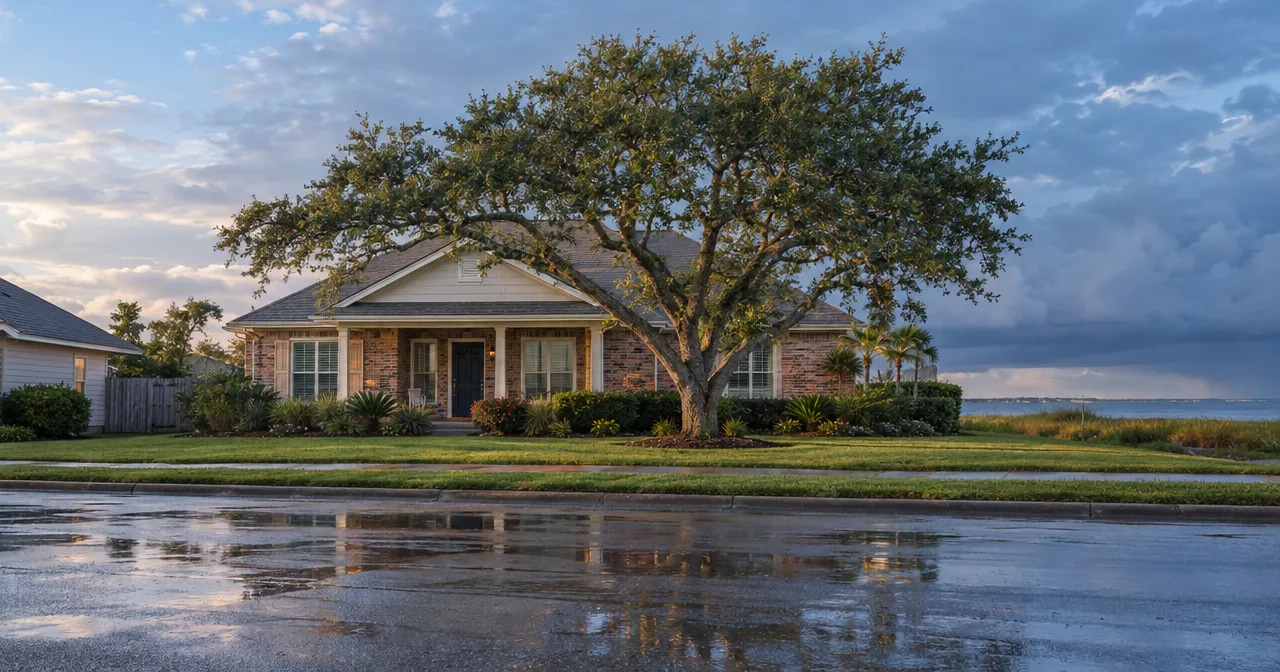
A storm hits a home near Brownsville. Wind damages part of the roof, rain stains the upstairs ceiling, and water later rises over the front step. The car in the driveway also takes on water. It is tempting to call all of this “hurricane damage,” but that label does not tell you which insurance policy might respond.
The useful question is how each part of the property was damaged. Wind, rain entering through an opening, and water rising from the ground can involve different policies, conditions, deductibles, and claim investigations. The same distinction matters after a tropical system in Houston or Kingwood and after a severe rainstorm far inland in Austin or Dallas. Here is a practical way to sort the questions before—and after—a storm.
Follow the path of the water, not just the name of the storm
Imagine three separate wet rooms. In the first, wind tears off roofing and rain enters through the new opening. In the second, heavy rain pools outside and flows under a door. In the third, a coastal surge pushes seawater across neighboring lots and into the house. The rooms may look alike once the carpet is wet, but they do not necessarily present the same insurance claim.
The Texas Department of Insurance (TDI) separates home, flood, and wind/hail coverage: a typical home policy can address covered wind or hail damage, a flood policy addresses qualifying rising water, and coastal owners may need a separate wind policy. None of that means every wet room automatically qualifies. The policy wording, physical evidence, timing, exclusions, and limits matter.
A roof leak by itself is not proof of covered wind damage. The adjuster may need to determine whether a storm created an opening, rain entered through a damaged component, or an older maintenance problem caused the leak. Similarly, water at floor level is not automatically a covered flood merely because it rained heavily: the loss must satisfy the applicable flood policy's definition and conditions. Keep these as questions to investigate, not conclusions to make from a photograph.
When wind and rain come through the roof or wall
If a covered wind event damages a roof, window, or exterior wall and rain then enters, the home or wind policy may be relevant to both the exterior damage and resulting interior damage. The answer depends on the form and endorsements. Ask specifically whether interior rain damage requires a storm-created opening, and whether there is any limitation for wind-driven rain, preexisting deterioration, roof age, or cosmetic hail damage. A contractor's statement that “insurance will cover it” cannot replace the policy language and an adjuster's findings.
That question becomes especially important along the Gulf Coast. Many coastal homeowners policies exclude wind and hail, so the owner may have a separate windstorm policy. The Texas Windstorm Insurance Association (TWIA) explains that its policies cover wind and hail, not flood. TWIA is not automatically available at every coastal address; eligibility and the particular insured property matter. A home in an eligible coastal area may require coordination among the regular homeowners policy, a wind policy, and a flood policy. An inland homeowner in Frisco, Cedar Park, or San Antonio might instead find wind and hail in the primary home policy, subject to its terms.
Suppose a Brownsville homeowner has a windstorm policy, and flying debris breaks a window before rain wets the living-room wall. The homeowner should document the broken window, indoor water, and sequence of events, then ask the wind insurer how the policy treats the interior. If water also rises from the street into the same room, that portion may raise a separate flood question. One damaged wall can require evidence about more than one cause; it should not be assigned to a policy by guesswork.
When water rises from outside: flood and storm surge
Flood is not limited to a river overtopping its banks. The National Flood Insurance Program (NFIP) describes flooding as a qualifying, temporary inundation of normally dry land from sources such as overflowing tidal or inland water or unusual, rapid surface runoff. Its definition includes an extent requirement—generally two or more properties, at least one yours, or two acres. Storm surge is an unusual rise in coastal seawater and can create a flood loss; intense inland rainfall can create one too.
A home near the water in Cameron County faces a different mix of exposures from a home in Montgomery or El Paso, but being inland or outside a mapped high-risk zone does not make runoff impossible. A low spot in a subdivision or a drainage problem can matter more to an individual house than its distance from the Gulf. Ask about flood protection based on the property and its surroundings, not just whether a lender requires it.
Most homeowners policies do not cover flood damage. A separate NFIP or private flood policy may address qualifying water that enters from the ground. Yet the word “separate” matters: buying flood coverage does not repair a wind-damaged roof, and buying wind coverage does not substitute for flood coverage when rising water enters the first floor. Private flood terms can differ from NFIP terms, so compare actual forms rather than assuming they are interchangeable.
Not every water problem is a flood claim. A single clogged drain, pipe leak, or isolated sewer backup raises different questions; some home policies offer water-backup coverage, while an NFIP policy treats sewer backup differently when it is directly caused by a qualifying flood. If water appears without a clear external flood, tell the adjuster exactly what you saw rather than describing every incident as “flooding.”
What the flood policy pays for—and what it leaves out
For a household, it helps to separate the building, belongings, and cost of living elsewhere. The NFIP's coverage guide lists building coverage up to $250,000 for a residence and contents coverage up to $100,000; these are separate coverage choices, generally with separate deductibles. Building coverage can include covered structural elements and installed systems. Contents coverage can include eligible furniture, clothing, and electronics. Check the limits actually selected on your declarations page rather than assuming you bought the program maximum.
The NFIP generally does not pay additional living expenses such as a hotel while the home is repaired. Its coverage for personal property in a basement is limited, and it excludes many outdoor items. A family that must relocate after rising water should budget for the possibility that neither its NFIP policy nor the homeowners policy pays those costs; ask about any available private flood options and read their loss-of-use language carefully. A private policy may have different limits, exclusions, deductibles, and waiting periods—not automatically better terms.
Rebuilding value also deserves a separate calculation. If an insured home's realistic reconstruction cost is above $250,000, the NFIP residential building maximum may leave a large gap after a severe flood. A high-value or custom home can have costly finishes, systems, and code-related work. Compare the home's wind/home dwelling limit and the flood building limit against a current reconstruction estimate, rather than the purchase price or property tax assessment. Ask how each policy treats code upgrades and whether excess or private flood coverage is available for the address.
Flood coverage usually involves a waiting period: the NFIP says a new policy generally becomes effective 30 days after purchase, with specified exceptions, including certain mortgage transactions. A named storm already in the forecast is not the time to assume new protection will begin immediately. Confirm the effective date in writing for any NFIP or private option.
The deductible can change the outcome of the same storm
A wind/hail or hurricane deductible is often different from the standard home deductible. A percentage deductible may be calculated using the insured dwelling amount rather than the cost of one repair. For illustration, a 2% deductible on a $420,000 dwelling amount is $8,400. A covered $7,000 wind repair would not produce a payment under that example if no other covered wind damage were involved. Actual claim calculations depend on the policy, covered damage, and applicable deductible.
A flood policy has its own deductible or deductibles, and a comprehensive auto claim may have another. The presence of three policies does not merge their deductibles into one. If the same storm damages the roof, the first floor, and a vehicle, review the out-of-pocket amounts for each applicable claim before treating a low premium as a complete comparison. Also ask whether the roof is settled at replacement cost, actual cash value, or under a roof schedule; the way the loss is valued can matter as much as the deductible.
What if the vehicle and the business are damaged too?
A submerged car is not protected by the home's flood policy. TDI's auto insurance guide says comprehensive coverage generally addresses flood damage to a vehicle, subject to the policy's deductible and terms. Liability-only auto insurance does not pay to repair your own flood-damaged car. If you own a classic car, motorcycle, RV, boat, or business vehicle, review the relevant specialty or commercial policy rather than assuming its coverage mirrors an ordinary personal auto form. Avoid starting or driving a vehicle that may have been flooded until it has been safely evaluated.
Business owners need a separate look at the building, inventory, equipment, vehicles, and time away from work. A business owners policy or commercial property policy may cover certain storm damage, but typical commercial property coverage does not automatically cover flood. NFIP commercial flood coverage offers up to $500,000 for the building and $500,000 for contents. Its flood policy does not cover income lost because the business closes. A shop in Houston or a contractor's office near the coast should ask whether any private flood and business-income coverage addresses a covered flood, what triggers it, and how long an interruption must last. Do not assume standard business interruption coverage responds to a peril excluded by the underlying property policy.
For example, a small retailer might lose ceiling tiles from a wind-damaged roof and stock from water entering at ground level, then close for repairs. Those are three distinct questions: damage from wind/rain, damage from rising water, and lost operating income. General liability protects against certain claims by others; it does not replace property or flood insurance for the retailer's own damaged inventory.
If water is already inside, build a clear claim record
First, follow local safety guidance and do not enter standing water where electricity or structural damage may pose a hazard. Once safe, take wide and close photos of the exterior, the apparent point of entry, water lines, damaged rooms, and affected belongings. Note when wind damage appeared, when rain entered from above, and when water first rose outside; save weather alerts if available. A dated timeline is more useful than calling everything “storm damage.”
Report potential losses promptly to the relevant insurers—home, wind, flood, auto, or commercial—and give each a consistent account of what happened. Ask for claim numbers and the next steps under each policy. Make reasonable emergency measures to prevent additional damage where it is safe to do so, but photograph conditions first when possible, keep small samples of damaged materials if safe, and retain receipts. The NFIP's damage-documentation guidance recommends recording water levels and item details before disposal, while promptly discarding items that create health risks.
If adjusters disagree about how water entered, ask each for a written explanation tied to policy language and the evidence considered. Do not conceal another possible cause of loss to fit a preferred policy. When repairs uncover more damage, send the new information to the claim handlers. An insurance agent can help you locate policy documents and understand which carrier handles each portion; the carriers and adjusters determine coverage under the applicable forms.
A pre-storm review that takes the uncertainty out of the paperwork
Set your home, wind, flood, auto, and any business declarations pages side by side. Then ask:
- Does my home policy include wind and hail at this address, or is there a separate coastal wind policy? What are the rules for wind-driven rain and interior water damage?
- Is there an active flood policy for both the building and contents? What is its effective date, deductible, and limit?
- What are my wind/hail and hurricane deductibles in dollars, and how is the roof valued?
- Would my dwelling and flood building limits support realistic rebuilding costs? What about temporary housing and code-related expenses?
- Does each family or work vehicle have the physical-damage coverage I expect for flood, and what happens if business operations stop?
The goal is not to predict a claim settlement. It is to know which gaps and out-of-pocket costs you would be accepting before the next storm. West Agency Insurance helps Texans compare home, coastal windstorm, flood, auto, commercial, and specialty coverage in the context of their property, household, and operations. For a personalized review or quote, contact West Agency Insurance and share what you need to protect.