
Texas Roof Insurance After Hail: Deductibles, Depreciation, and Coastal Gaps
A practical guide to how Texas roof claims are paid, how storm deductibles change the math, and what coastal homeowners should check before a loss.
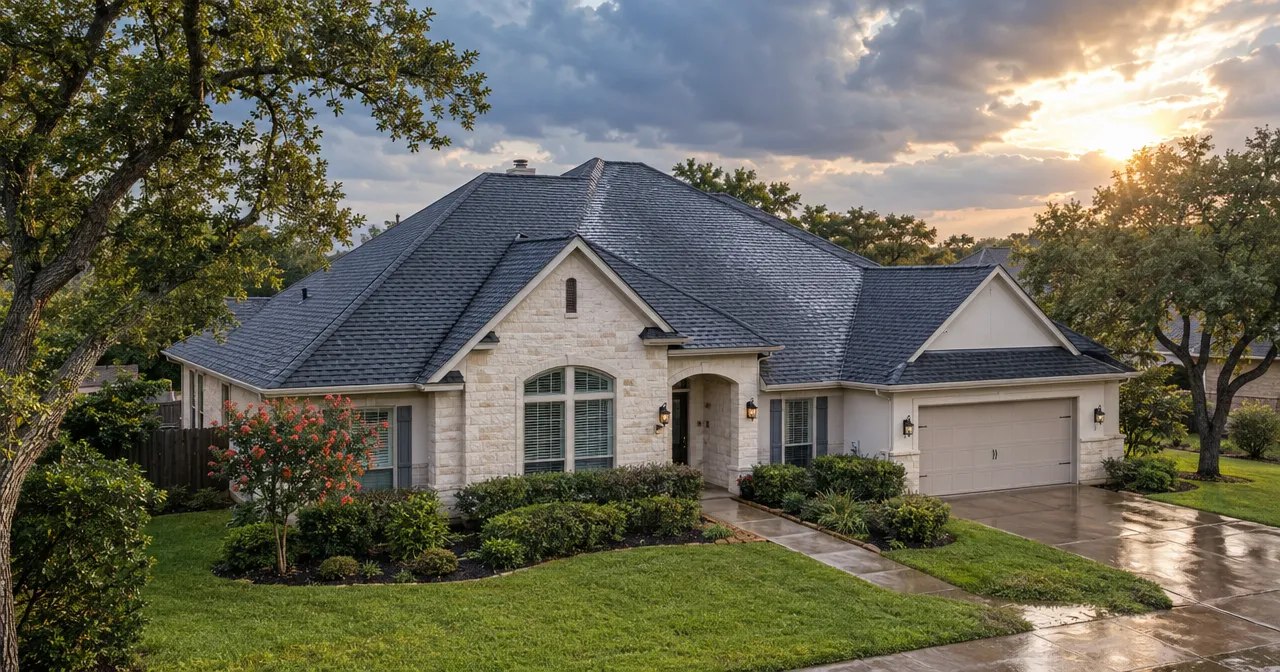
A hailstorm can leave two neighbors with similar-looking roof damage and very different repair bills. One homeowner has replacement cost roof coverage and a manageable wind-and-hail deductible. The other has an actual cash value roof settlement and a percentage deductible that is much larger than expected. Both may have valid insurance; the difference is in the policy details.
For Texas homeowners, the useful question is not simply “Does my policy cover hail?” It is which policy responds, how the roof is valued, and what I must pay before insurance pays. Those questions matter in hail-prone Dallas and Frisco, around Houston and Kingwood, and along the coast near Brownsville—although coastal homeowners may need a separate wind policy as well.
First, identify which damage your policy is meant to cover
Wind-driven shingles, hail impact, aging materials, and floodwater are not interchangeable causes of loss. A homeowners policy may cover sudden wind or hail damage, subject to its terms, while ordinary wear and deterioration generally are not covered events. An old roof does not become an insured loss just because it is due for replacement. The Texas Department of Insurance (TDI) recommends checking roof settlement terms at renewal because roof coverage can change as a roof ages.
Start with your declarations page and any endorsements. Look for the dwelling limit, the wind-and-hail deductible, any separate hurricane deductible, the roof settlement provision, and exclusions or special limits. The declarations page summarizes key numbers, but the policy and endorsements explain when they apply. If a document says “actual cash value,” “roof schedule,” “cosmetic damage,” or “windstorm exclusion,” ask your agent what that means for this roof and this address. Do not assume that every Texas homeowner has the same form.
Consider a house in Cypress after a hailstorm. If hail physically damages shingles and the event is covered, the roof claim may be evaluated under the wind-and-hail portion of the home policy. If the shingles are simply brittle after years of sun exposure, that is a different issue. The exact cause, damage assessment, exclusions, and settlement method determine the result—not the fact that a roofer recommends a new roof.
Replacement cost and actual cash value produce different bills
Replacement cost generally values a covered repair or replacement using current costs, within policy limits and conditions. Actual cash value (ACV) generally subtracts depreciation for age and condition. TDI illustrates these approaches with roof claim examples; the difference can be substantial even when the same storm damages the same roof.
Here is a simplified example, not a quote or prediction of a claim. Suppose a covered hail loss requires a $24,000 roof replacement and the applicable deductible is $6,000. If the roof is eligible for replacement cost settlement and the full $24,000 is approved, the insurer’s total payment could be $18,000, leaving the homeowner to pay the $6,000 deductible. If the policy instead settles this roof at an ACV of $18,000, the insurer’s payment could be $12,000 after the same deductible. The homeowner would then need $12,000 to complete a $24,000 job. Other limits, exclusions, estimates, and coverage terms can change these figures.
A replacement cost claim may not arrive as one check. Many insurers initially pay an amount reflecting depreciation and the deductible, then release eligible withheld depreciation after qualifying repairs are completed and documented. Ask what proof is required and whether the policy has a repair deadline. A first check that looks like an ACV payment does not by itself prove your policy is ACV-only; the settlement documents should say whether depreciation is recoverable.
Also distinguish the roof’s settlement method from the dwelling limit. A house can have a replacement cost dwelling limit while an endorsement applies different terms to the roof. Ask for the exact wording, not a shorthand assurance that the home has “full coverage.”
A percentage deductible is based on the insured home value—not the roof price
A wind-and-hail or hurricane deductible may be a flat dollar amount or a percentage. With a percentage deductible, the percentage is generally applied to the applicable dwelling coverage limit, not to the contractor’s roof estimate. TDI urges homeowners to convert percentage deductibles into dollars before choosing a policy.
Imagine a home insured for $400,000 with a 2% wind-and-hail deductible. That deductible is $8,000. If covered roof repairs are approved at $18,000 and replacement cost terms apply, the insurer’s total payment might be $10,000, with the homeowner paying $8,000. If the deductible were 3%, it would be $12,000, leaving a potential $6,000 insurance payment and $12,000 homeowner share. The percentage is not 2% or 3% of the $18,000 roofing bill.
The applicable deductible may depend on the cause of loss and the wording of your policy. Some policies distinguish a standard all-other-perils deductible from a wind/hail deductible or a named-storm or hurricane deductible. Check how your insurer defines a trigger rather than assuming every windy day is a “hurricane” claim. The deductible also applies to the covered claim as the policy specifies; it is not a separate fee charged by your agent or an amount you pay directly to the insurer in advance.
For a practical budget check, multiply your dwelling limit by the stated deductible percentage and ask, “Could I pay this amount after a major storm?” That exercise is especially important when a home’s insured rebuilding value rises. A higher dwelling limit can increase the dollar value of a percentage deductible even when the printed percentage stays the same.
Inland hail and Gulf Coast wind are not the same insurance setup
Around Dallas, Austin, San Antonio, The Woodlands, and much of inland Texas, a homeowner may find wind and hail protection within a home policy, subject to its deductible and exclusions. On parts of the Texas Gulf Coast and in the Harris County area bordering Galveston Bay, the homeowners policy may exclude wind and hail. A separate windstorm policy, potentially through the Texas Windstorm Insurance Association (TWIA), may be needed. TDI’s home, flood, and wind comparison lays out why these are distinct coverages.
That distinction matters for a coastal roof. A hurricane can cause wind damage to shingles and also push water onto a property. Wind coverage and flood coverage are not substitutes for each other. A wind policy addresses covered wind or hail damage; flood insurance addresses qualifying rising-water losses. Most homeowners policies do not cover flood damage, and FEMA explains the separate flood-insurance program. A coastal household should confirm how the home, wind, and flood policies fit together rather than treating “hurricane coverage” as a single box to check.
For example, a home near Brownsville could face torn roofing from wind and ground-level water entering the home during the same storm. Different policies may respond to different portions of the damage, and claims can require careful documentation of what happened. By contrast, an inland Frisco homeowner may be more concerned with hail damage and the wind/hail deductible than with a separate TWIA policy. Neither geography alone nor a map label establishes your coverage; your address and policy documents do.
Coastal rebuilding also raises questions about materials, local requirements, and the cost of repairing the full home—not just replacing shingles. If you own a custom or high-value home, ask whether your dwelling limit and any additional rebuilding or ordinance-and-law coverage match the house’s materials and construction requirements. A $400,000 purchase price or tax assessment does not tell you what it would cost to rebuild today.
What to check beyond the basic roof deductible
The roof decision is not just “ACV versus replacement cost.” Bring these points to a coverage review:
- Roof-specific endorsements: Is there a roof payment schedule, age-based limitation, cosmetic-damage exclusion, or separate wind/hail exclusion? Ask for a plain-language explanation and the exact policy wording.
- Repair versus replacement: Does the insurer’s estimate cover a repair, one slope, or the whole roof? A recommendation from a contractor does not automatically make full replacement a covered expense. Ask what the adjuster found and how the policy applies.
- Materials and labor: Tile, metal, specialty shingles, steep slopes, and custom roof details can affect the scope and cost of work. Make sure the roof description and insured rebuilding estimate reflect what is actually on the house.
- Code-related costs: A covered loss may trigger construction requirements that were different when the home was built. Ask whether an ordinance-or-law endorsement is available and what it covers; do not assume every code upgrade is automatically included.
- Other damage: Gutters, screens, exterior finishes, detached structures, and interior water damage may have different coverage questions. Inventory what the storm affected, but let the policy and adjuster determine covered amounts.
You can also ask whether an impact-resistant roofing material qualifies for a discount, but compare installation cost, policy treatment, and coverage terms before spending money. A discount does not resolve an inadequate dwelling limit or a deductible you cannot comfortably fund.
If a storm has already damaged your roof
Safety comes first: avoid climbing onto a wet or damaged roof. Photograph visible damage from safe locations, note when the storm occurred, and make reasonable temporary repairs to prevent additional harm. Keep receipts for tarps or other emergency work. Contact the insurer promptly and ask about any claim-reporting deadlines in your policy. TDI’s home insurance guide describes the importance of documenting damage, preserving receipts, and avoiding permanent repairs before the insurer has had a chance to inspect, when possible.
Get a written, itemized roofing estimate rather than accepting a verbal promise that “insurance will buy a new roof.” Compare the contractor’s scope with the insurer’s estimate: roof area, materials, flashing, ventilation, decking if damaged, labor, and any code-related items. If they differ, ask the adjuster for an explanation and submit supporting documentation. Do not confuse a coverage dispute with a disagreement about the amount of an accepted covered loss; the available steps may differ.
Be wary of anyone offering to “absorb” or “waive” your deductible. TDI says contractors may not waive a homeowners insurance deductible or help you avoid paying it. A contractor’s promise to cover that amount may involve a misleading invoice or a shortcut in the actual work. Your deductible should be part of the budget from the outset.
A ten-minute roof coverage review
Before renewal—or before the next storm—put your declarations page and roof endorsements side by side and answer these six questions:
- Is wind and hail included in my home policy, or do I need separate coastal wind coverage?
- Is this roof settled at replacement cost, ACV, or under a roof payment schedule?
- What are my all-other-perils, wind/hail, and hurricane or named-storm deductibles in dollars?
- Are there roof exclusions or limits for cosmetic damage, materials, or particular causes of loss?
- Does my dwelling limit reflect current rebuilding costs and the home’s actual construction?
- If water rises into the house, do I have separate flood coverage, and what would it cover?
You do not need to memorize policy language to have a useful conversation. You do need clear answers tied to your own address, roof, and financial comfort with a deductible. West Agency Insurance helps Texas homeowners review home, coastal windstorm, and flood protection in the context of the rest of their household coverage. If you want to compare suitable options or review an existing policy, request a personalized quote or coverage review.